How to Improve Your Aim in Browser Games
Faster clicks are not the secret to better aim. Learn how accuracy, timing and reading the target win more points in Aim Trainer Pro and Bullseye Archery.
Good aim looks like pure reflex, but most of it is decision making. Where do you look first? Which target do you take? When do you hold back instead of clicking? Players who answer those questions well usually beat players with faster hands.
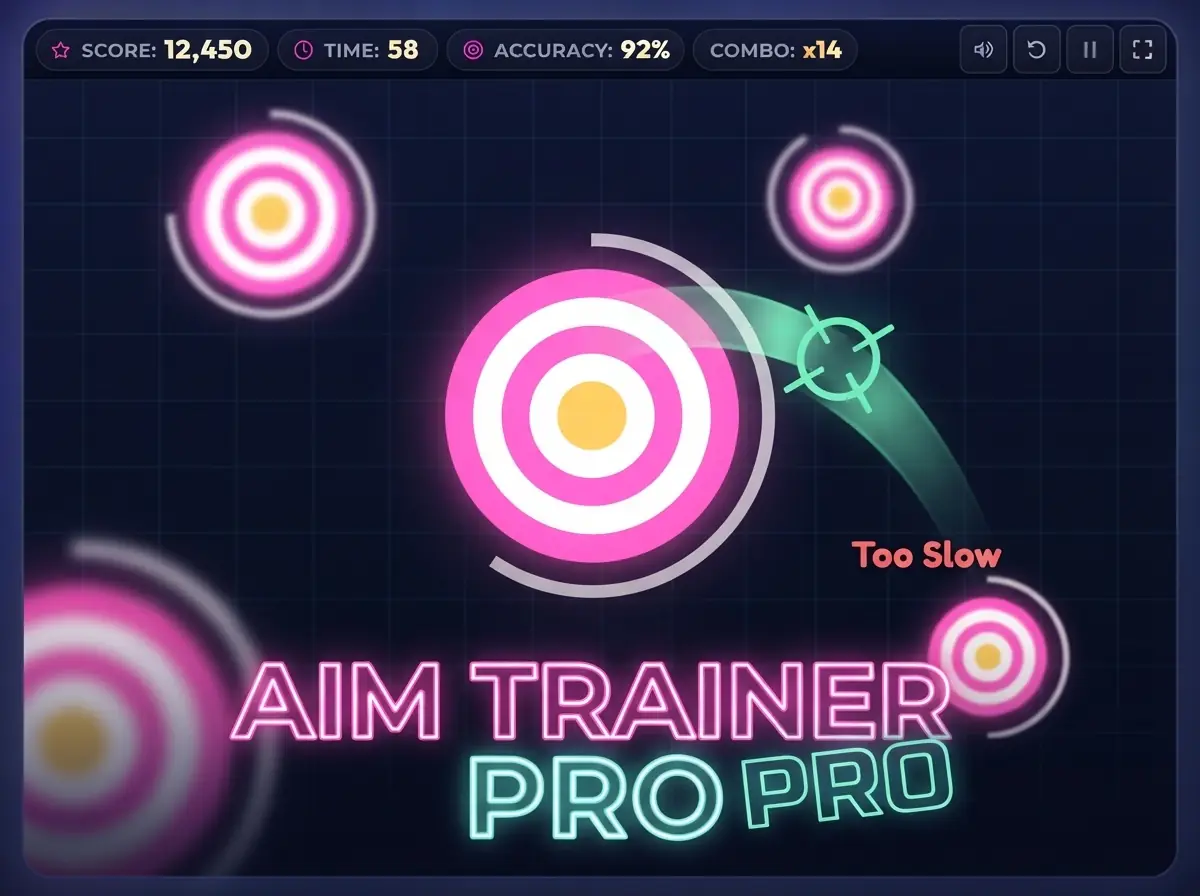
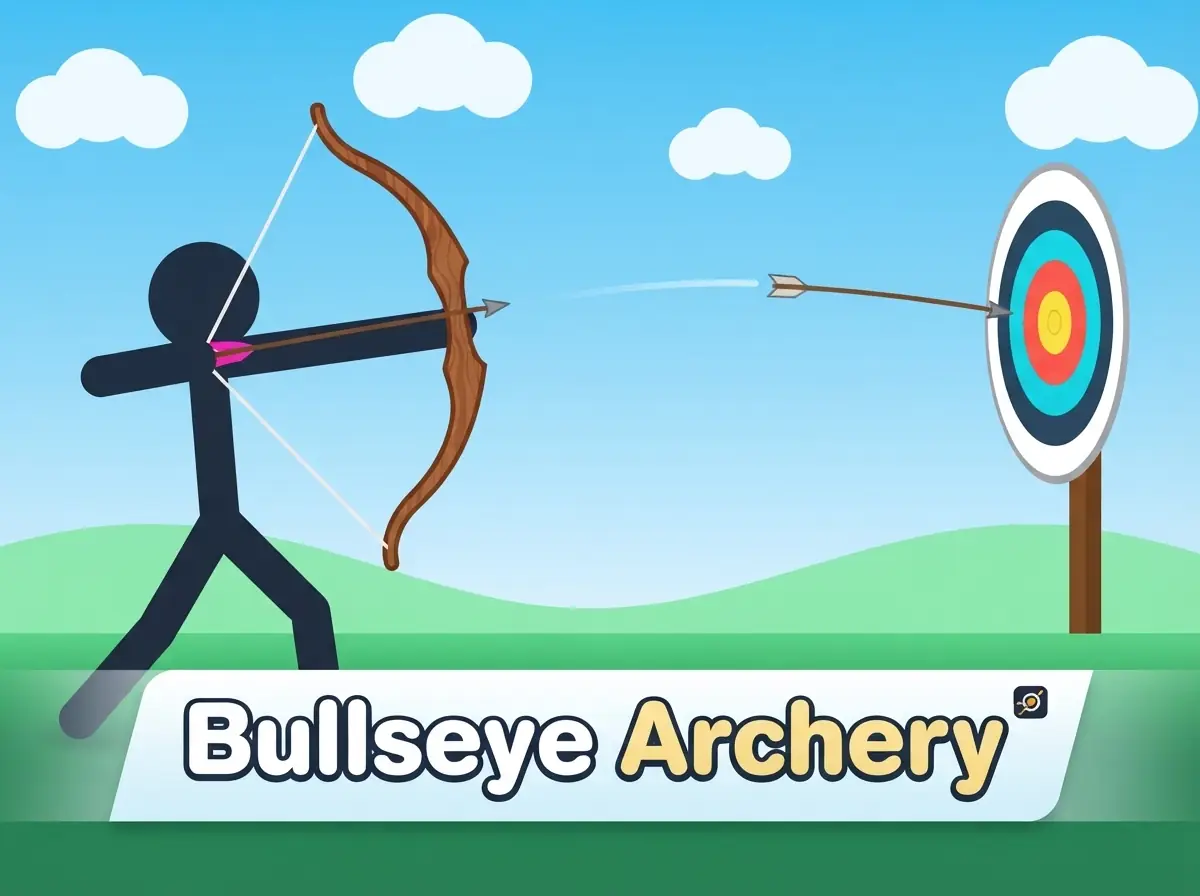
This guide uses two very different MindoraPlay games as practice grounds. Aim Trainer Pro is a 30-second click-and-tap test of speed and precision. Bullseye Archery is slow and deliberate: ten arrows, gravity and wind. Together they cover almost every kind of aiming you will meet in browser games.
Accuracy first, speed second
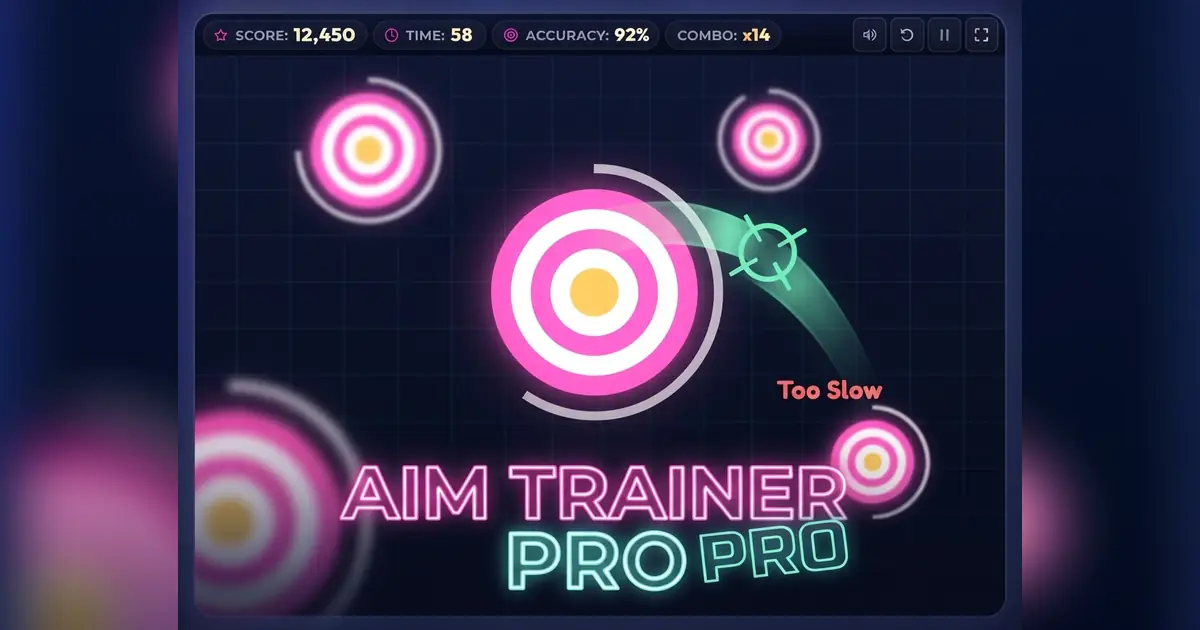
The most common mistake is clicking as fast as possible and hoping the hits follow. In Aim Trainer Pro, that habit is punished twice. Every miss lowers your accuracy, and it also resets your combo.
The combo matters more than it first appears. Your score multiplier goes up by one for every five hits in a row: five straight hits double your points, ten triple them. A single wasted click near the end of a long streak can cost more points than the next three hits earn. Clicking empty space is never free.
A good drill is to play one full round where your only goal is to keep accuracy above 90%, however slow that feels. Then play a normal round. Most players find their score goes up, because longer streaks more than make up for the slower pace.
Hit the centre, not just the target
Aim Trainer Pro rewards three things on every hit: a base 50 points, up to 50 more for how close you are to the centre, and up to 50 more for how quickly you hit the target after it appears. Clicks in the inner part of the target flash a "Bullseye" label, which is an easy way to check yourself.
That means a sloppy edge hit can be worth barely half of a fast, central one. Aim for the yellow core every time rather than settling for "somewhere on the target". The habit carries over to every game with a hitbox.
Learn how targets behave
Every target in Aim Trainer Pro follows the same life cycle:
- It pops in, growing to full size within a fraction of a second.
- It stays at full size until a little past the halfway point of its life.
- Then it starts to shrink, ending at about half its size before it vanishes.
The white ring around each target shows how much time it has left. A target that disappears counts as a miss, so it breaks your combo exactly like a bad click.
That gives you a simple priority rule. If a target's ring is almost empty, take it now, even though a newer target would give a bigger speed bonus. Saving the streak is worth more. When every ring is still healthy, go for the newest targets while they are large and the speed bonus is highest.
Pick the right difficulty
The three difficulty levels change more than you might think:
- Easy: large targets that last a little over two seconds, with up to two on screen.
- Normal: medium targets that last about one and a half seconds, with up to three on screen.
- Hard: targets just over half the size of Easy ones, lasting a little over a second, with up to four on screen.
Stay on a level until you can finish rounds above 70% accuracy, which is what the game counts as a successful round. Moving up too early teaches panic clicking, the opposite of what you want to practise.
Aiming with gravity and wind
Bullseye Archery trains a different skill: predicting a curve instead of reacting to a point. You drag back from anywhere on the screen. The direction sets the angle, the distance sets the power, and the power level is shown above the bow as a percentage. A very short pull does not fire at all, so you never waste an arrow by accident.
While you pull, a dotted line previews the start of the arrow's path. It already includes gravity and the current wind, so treat it as your sight. It only shows the first part of the flight, though. You still have to judge where the curve ends.
The easiest way to get consistent is to fix one variable. Pick one power level, for example a full pull, and use it for every shot. Then you only ever adjust the angle, and every miss tells you something clear: too high, or too low.
Reading the wind
The first two shots of each tournament have no wind, which makes them perfect for finding your basic angle. From the third shot on, the wind changes with every arrow, and the strongest gusts get stronger as the tournament goes on. The meter at the top of the screen and the wind value in the scoreboard show its direction and strength.
A tailwind, blowing towards the target, makes the arrow arrive sooner, so it drops less and lands higher. Aim slightly lower. A headwind does the opposite, so aim slightly higher. Small corrections work better than big ones. Adjust a little, watch where the arrow lands and adjust again.
Moving targets and bonus balloons
The target creeps a little farther away with every shot. From the fifth shot it also starts sliding up and down, moving further and faster as you go. Trying to chase it in the middle of its path is hard, because that is where it moves fastest. It is easier to aim at one end of its path, where it slows down to turn, and release slightly early so the arrow and the target arrive together.
Around the third, sixth and ninth shots, three balloons float up between you and the target. Each one you pop is worth 15 points, and the arrow keeps flying after it pops one. A high, arcing shot through a balloon that still reaches the target is the best result in the game.
Scoring rewards patience too. Rings are worth from 1 point at the edge to 10 in the centre. Hitting bullseyes in a row adds a growing streak bonus: 5 extra points for the second, 10 for the third, and so on. A steady run of nines often beats wild attempts at tens.
Habits that improve any kind of aim
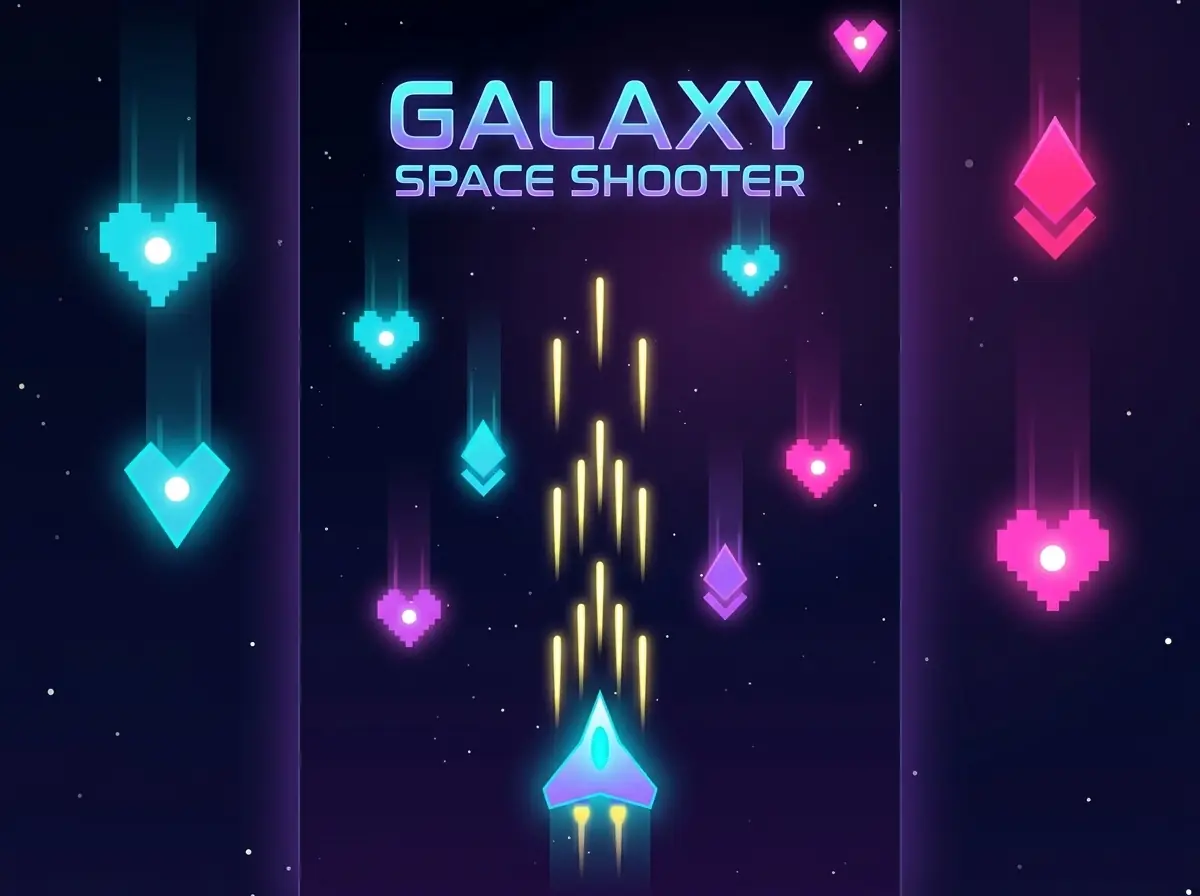
A few simple habits help in every game, from these two to fast shooters like Galaxy Space Shooter:
- Relax your hand. A tight grip makes you overshoot. Loose wrist, light click.
- Look where you will aim next. Move your eyes to the next target before you finish the current one.
- Use your index finger on touch screens. It is more precise than your thumb.
- Keep sessions short. Several focused rounds beat a long, tired session where mistakes become habits.
- Track one number at a time. In Aim Trainer Pro the results screen shows accuracy, average reaction time and best combo. Pick one and try to improve it this week.
Final thoughts
Better aim comes from removing wasted actions, not adding speed. Protect your streaks in Aim Trainer Pro, keep one variable fixed in Bullseye Archery, and read the target before you react to it. The speed comes on its own once your hits are reliable.